
High-flow technology in nozzle manufacturing is helping push printing speeds to the limit. Single-piece hotend construction has almost completely made us forget about heat creep issues. Combining these two technologies has found its way into almost all core solutions on the market. However, we now have other, less noticeable but still real issues. High-flow nozzles have a much more complicated inner shape: instead of a single straight channel, the flow splits into three smaller channels near the input, then reunites at an angle into a bigger one close to the output. This makes such nozzles much more vulnerable to clogging and makes cleaning out the clog much more painful. Single-piece construction makes it even worse, if not impossible.
For my DIY PET filament, I don't use HF nozzles at all, because no matter how clean the bottle is before processing, there's still a pretty big chance of some glue gunk or even a piece of leftover paper getting trapped inside the formed PET tube. Some people even keep the so-hyped carbon fiber filaments away from HF nozzles. But even with regular filament, there's still some danger of clogging from regular dust buildup.
The market is full of solutions to wipe dust off the filament on the go. However, as usual, I decided to model my own version.
Do we need another one? Absolutely not.
Did I overengineer it? Absolutely yes.
At first, I thought about making it with two slots for inserting a 4mm Bowden tube. However, a simple friction fit didn't work well here, because retraction movements during printing eventually caused the Bowden tube to slip out. Integration of the fittings in such a construction looked like overkill, making the whole module bulkier and heavier. So in the end, I stuck with the idea of making this cleaning module as light and small as possible, so it could be clipped anywhere right on the filament string without risk of snapping the filament or colliding with other parts.
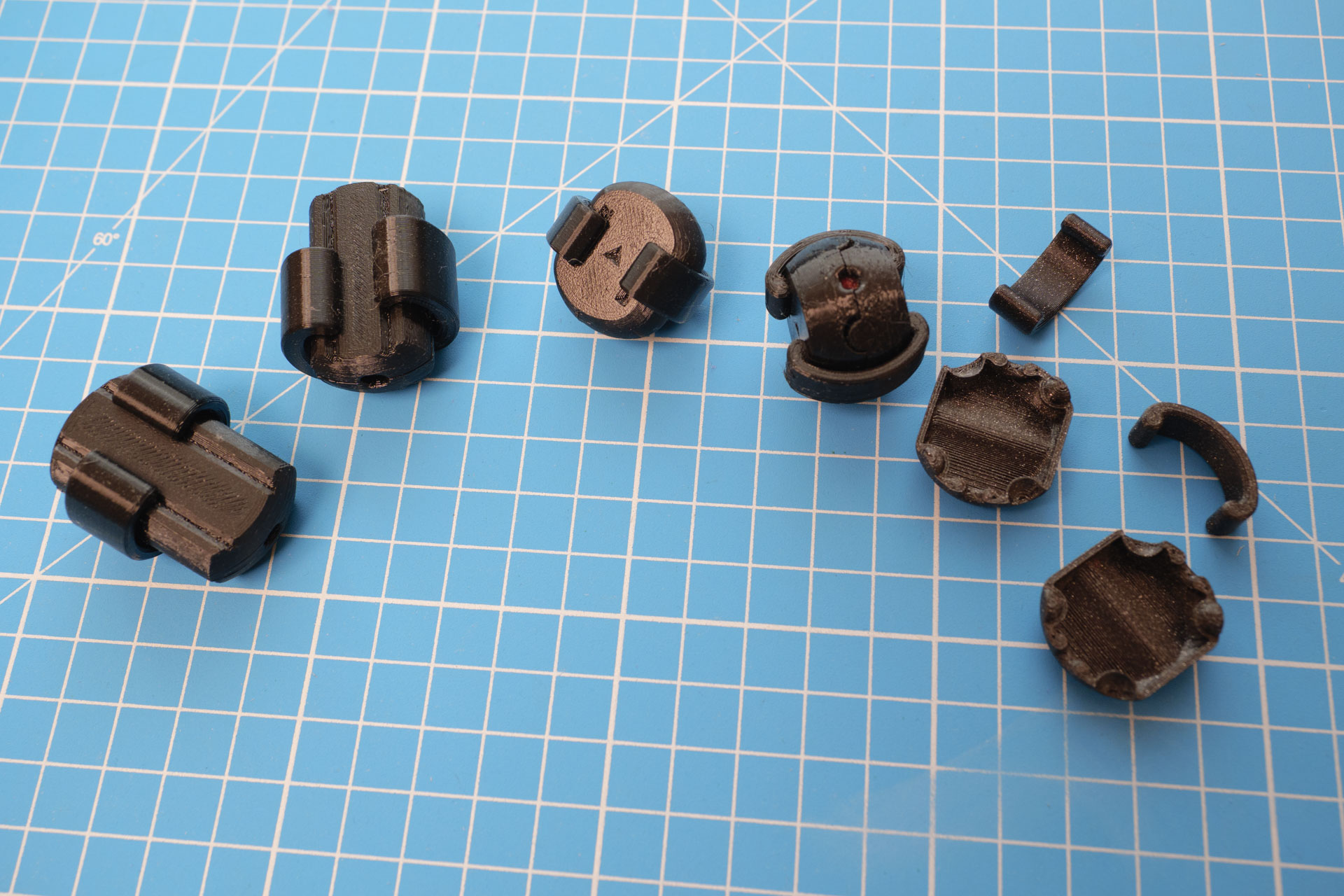
The final result is satisfying from most perspectives — aesthetically and functionally. It looks like a pretty complex shape, and sure it is, but it prints with zero support and without overhangs. It requieres minimum amount of the filament so it is pretty lightweight. Also it is as compact as it can be for ~20x20mm sponge peaces, so it can be clipped over filament string in the pretty tight spaces.
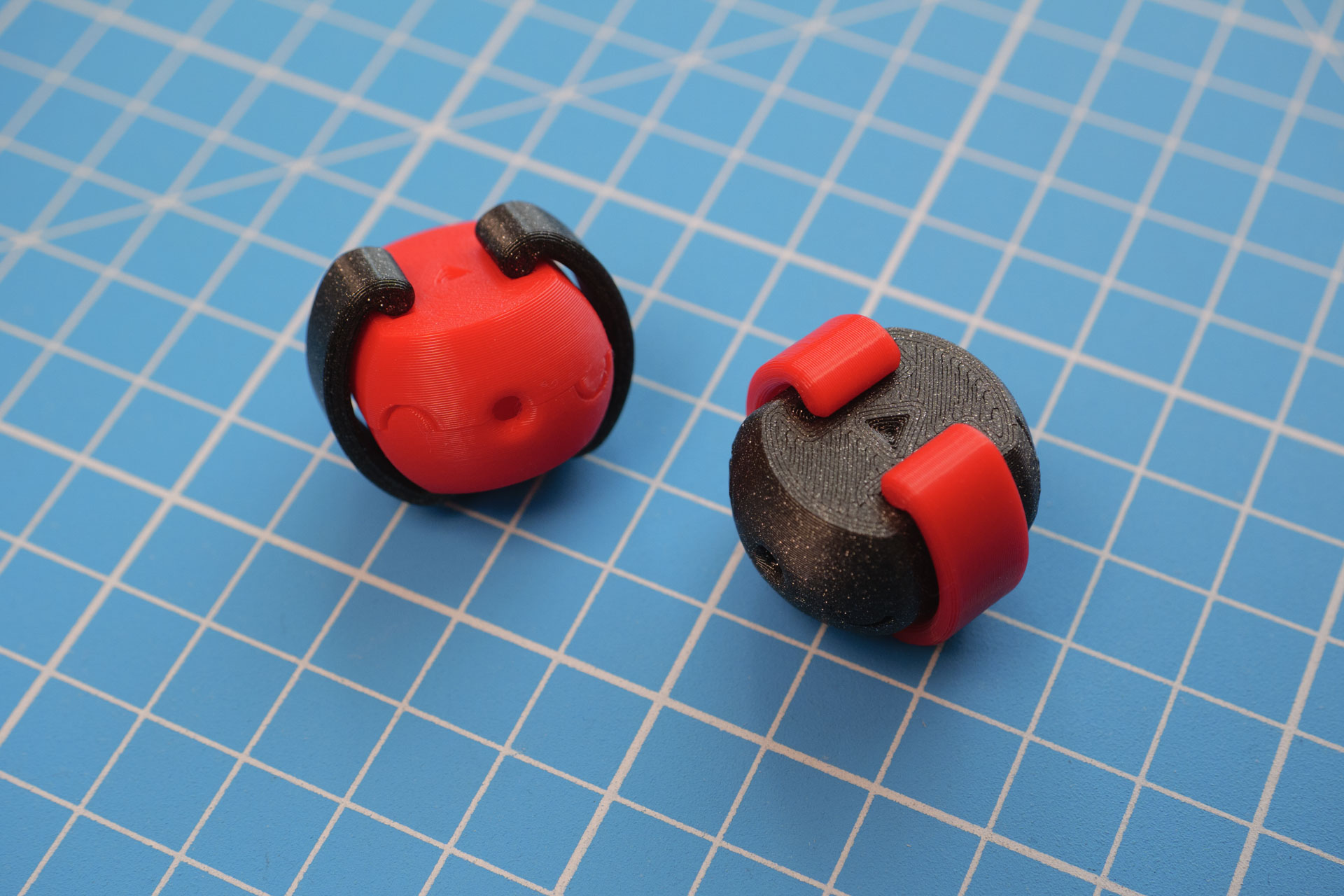
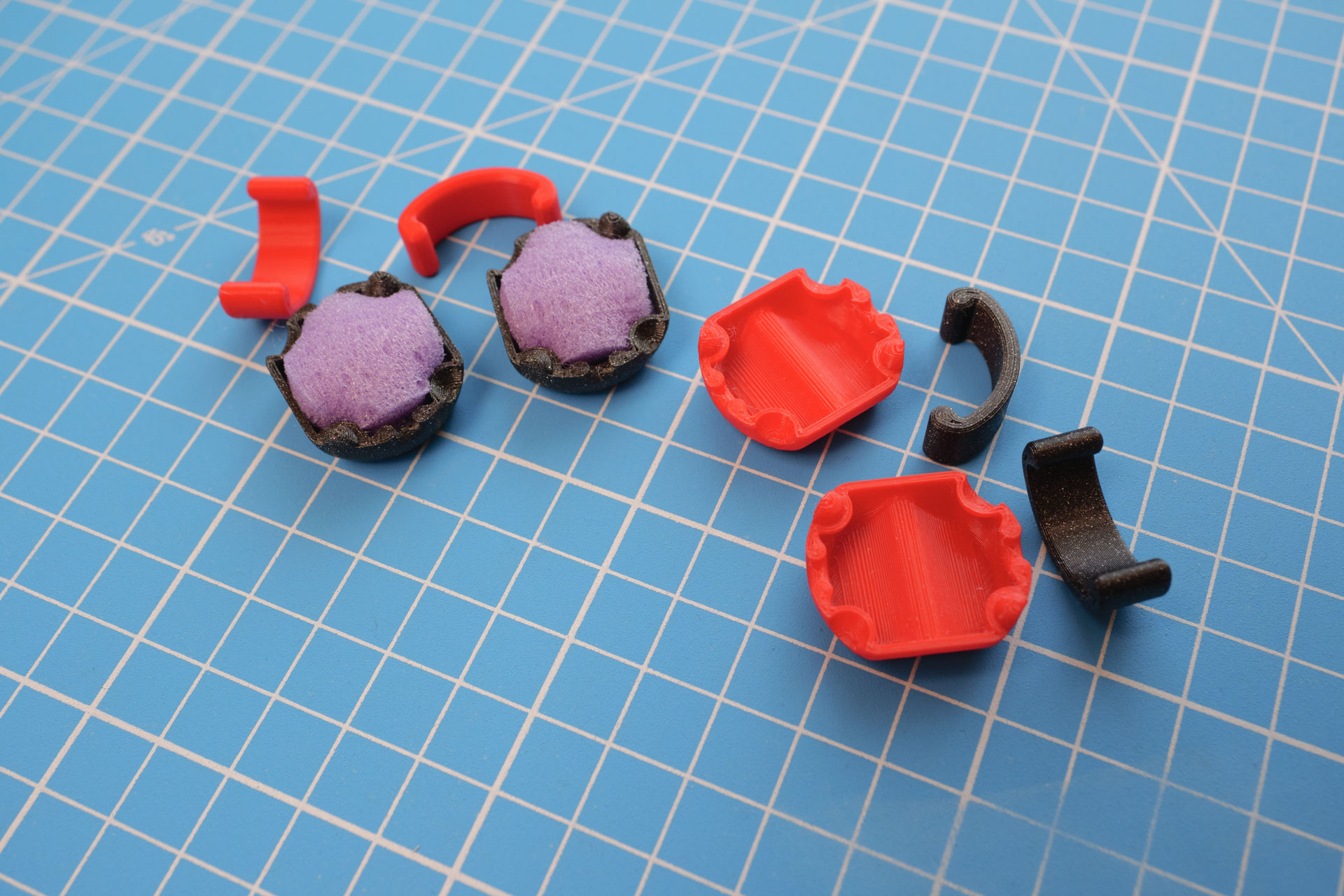
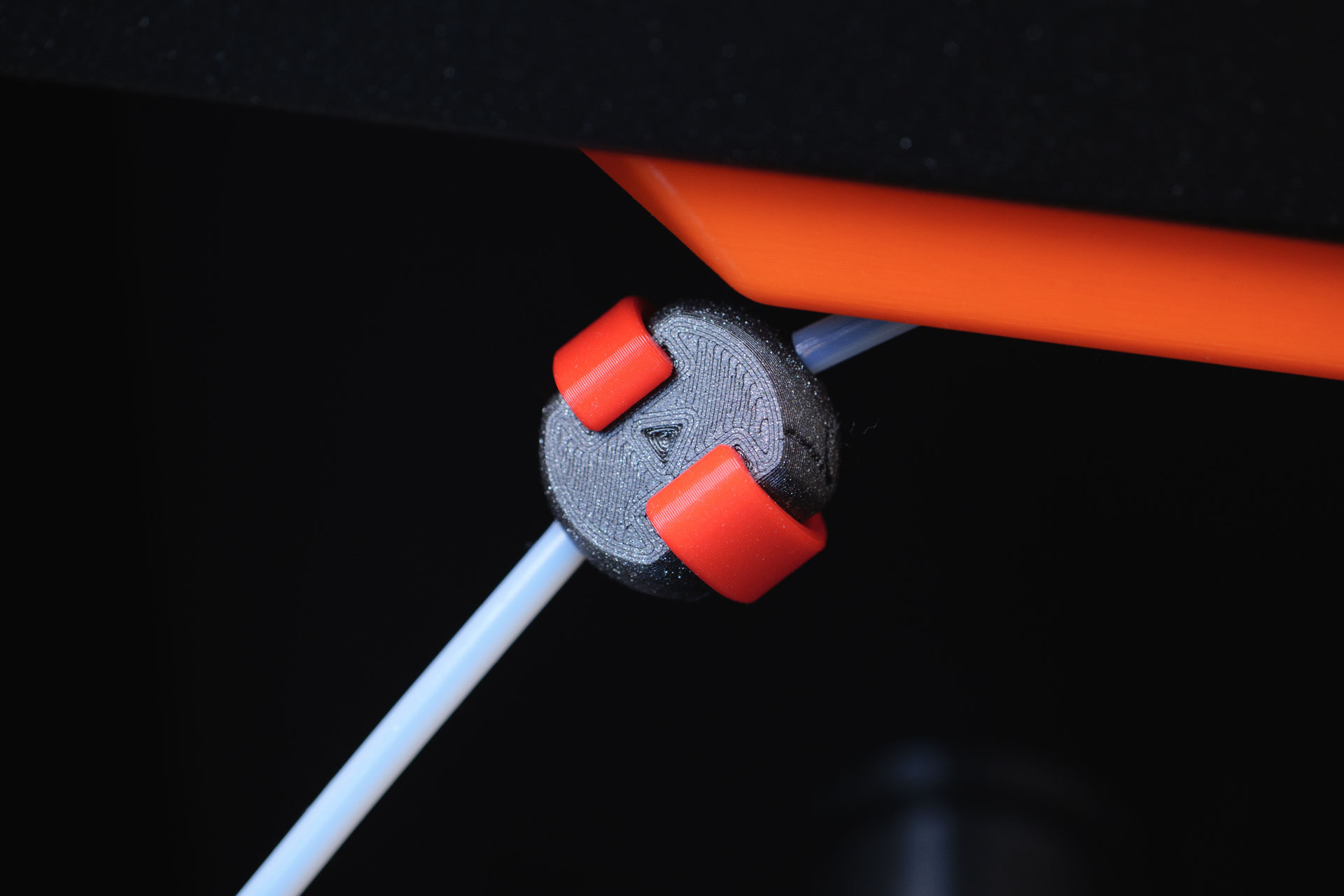
Here some
.stl files for you.
To be honest I prefer to use PETG for the elements with any anount of flex functions, like clips in this case. However the safest matherial for such element is PLA becasue even if some occasional friction will gring cleaner enclosure and create filamant dust, this dust will be the softest and lowest melting point from all available.
Version: 2026_09_06_000001
Created by TennojiM
All rights reserved
© 2026
All rights reserved
© 2026